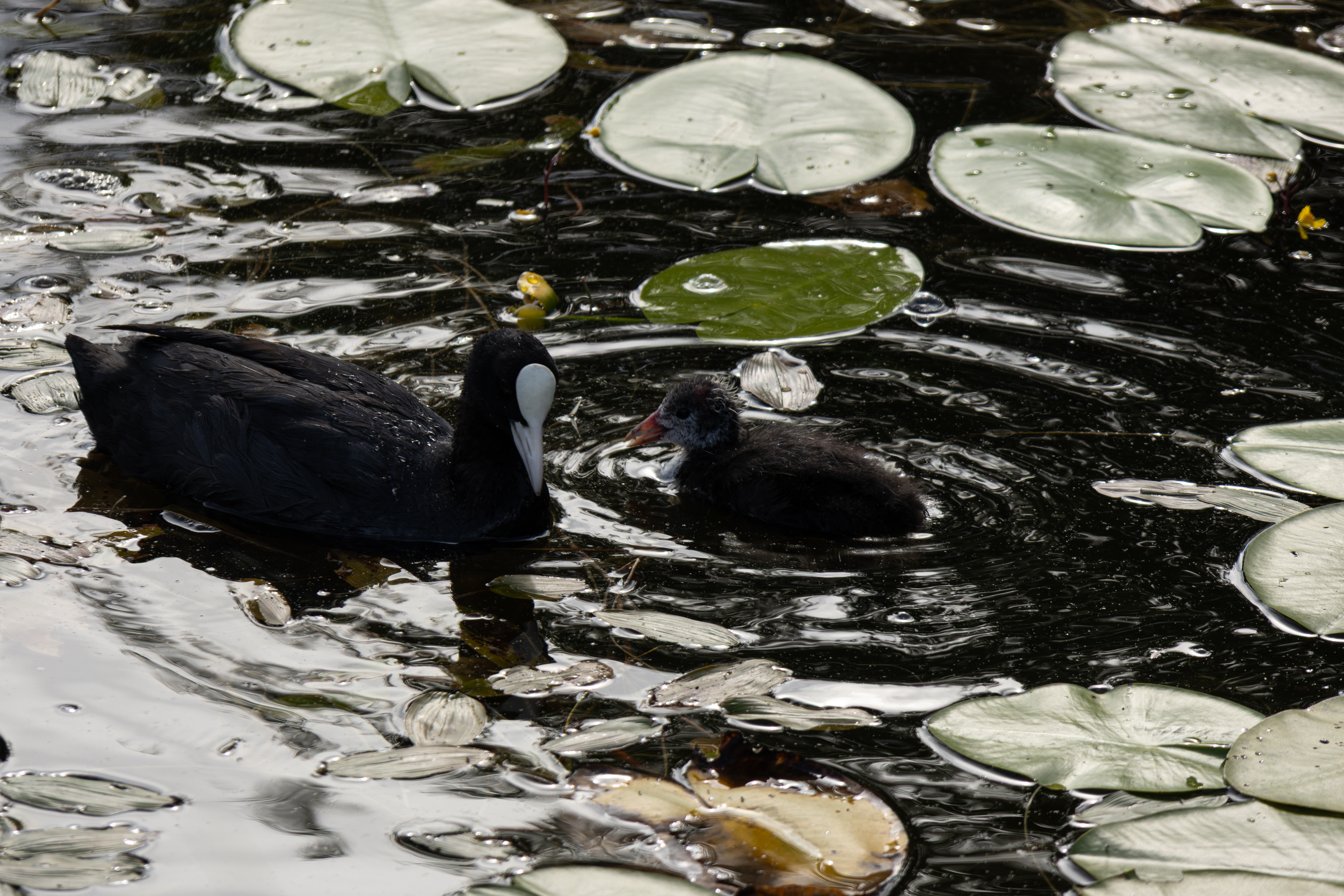
Marsh-Marigold, also known as kingcup (Sumpfdotterblume in German) is a typical spring flower of the Northern Hemisphere. In altitudes less than 1000 feet (300 m) the plant has been flowering for a month, i.e. since mid-March, in Central Switzerland. The vibrant yellow of the flower and dark green leaves are the hallmark of this beautiful plant.
On a hike to Mount Napf in the nearby Prealps, a few days ago (mid April), I shot the picutes below at an altitude of 3000 feet (1000 m).
Marsh-Marigold like a wet ground to thrive and are therefore found in marshes, ditches or wet woodland. They are not endangered and not ordinarily edible although early spring greens and buds may be eaten after being cooked. They are poisonous when eaten raw. The protoanemonins may cause convulsions, vomiting, bloody diarrhea and blistering of mucous membranes.
However, formerly the leaves and stalks have been used to treat skin conditions, such as insect bites and infections. Nowadays, the plant serves a limited indication in Homeopathy in the treatement of skin disorders, bronchitis and menstrual pain.
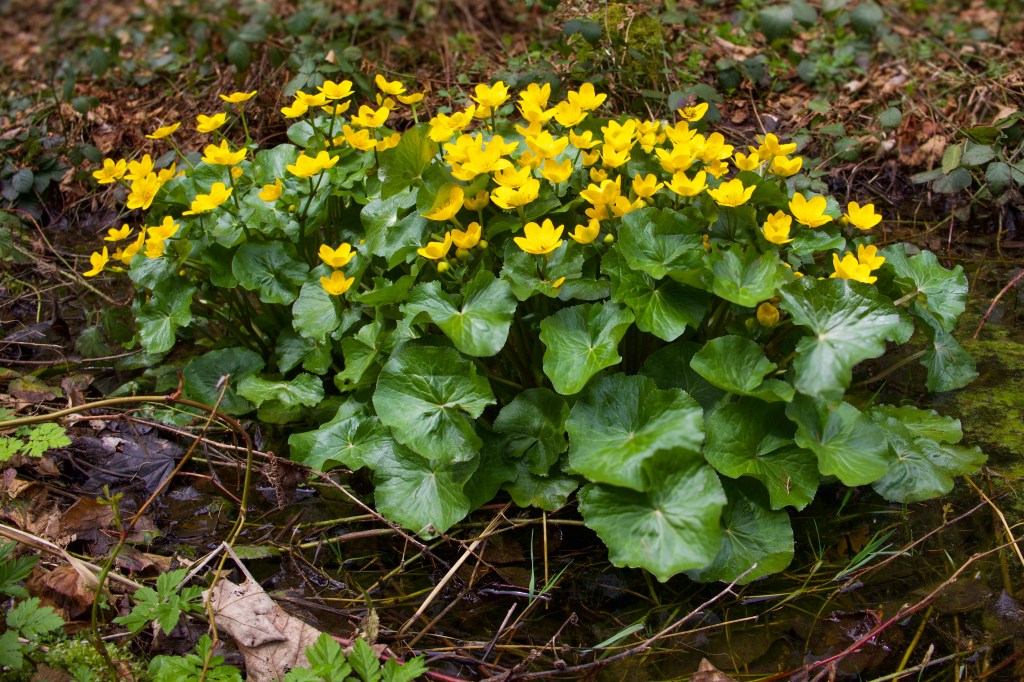
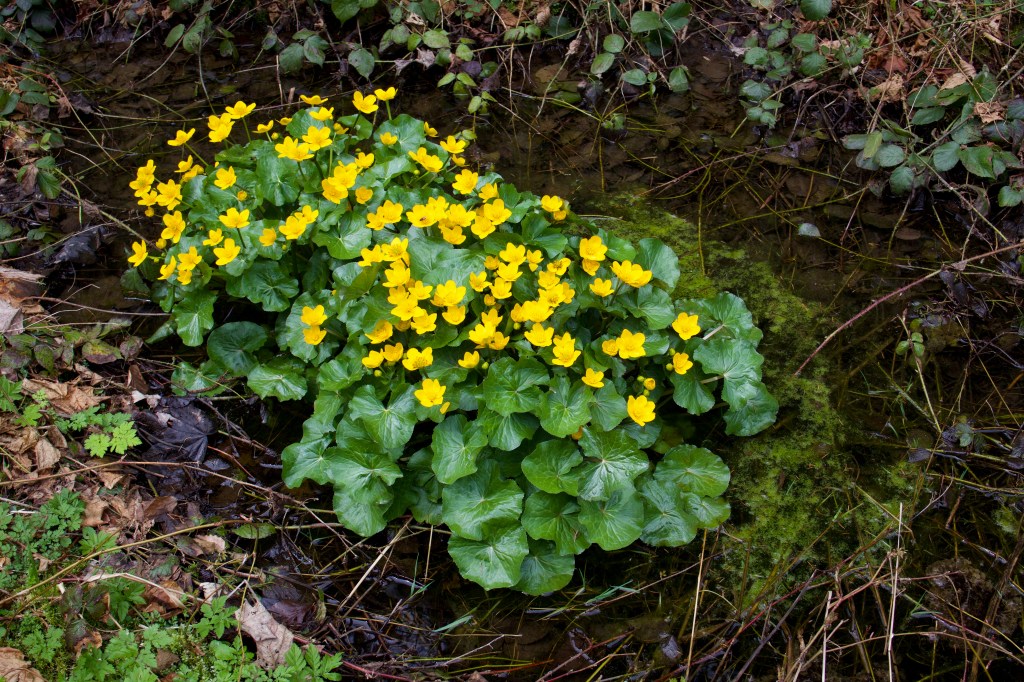
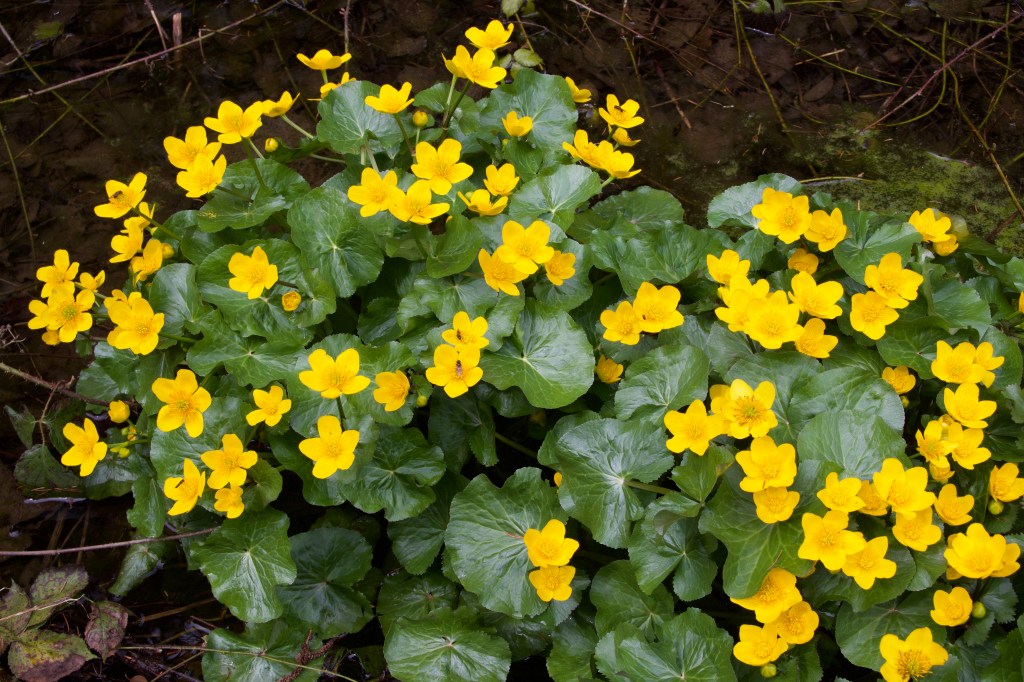
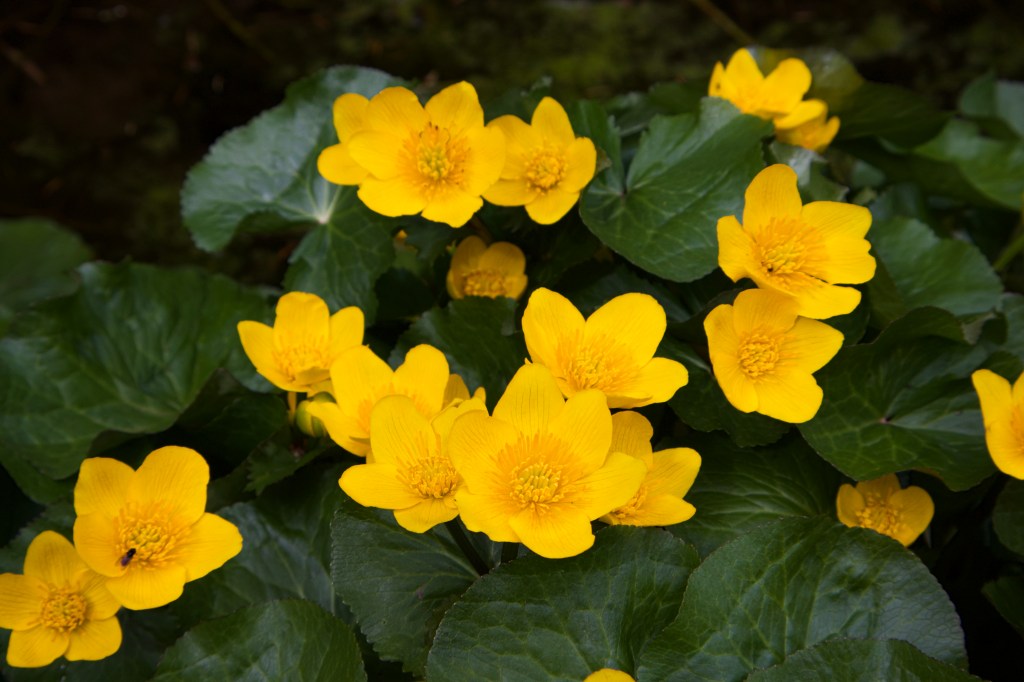
The marsh-marigold was named flower of 1999 in Germany. It was intended to raise awareness of the disappearance of plant species following the correction of brooks and wetlands, drying up the habitat of such plants and of amphibians using these places to procreate.
All text and photographs ©BA Hiltbrunner
A WordPress.com site
 Vogelmoos Nature Reserve
Leave a comment